The refreshing part
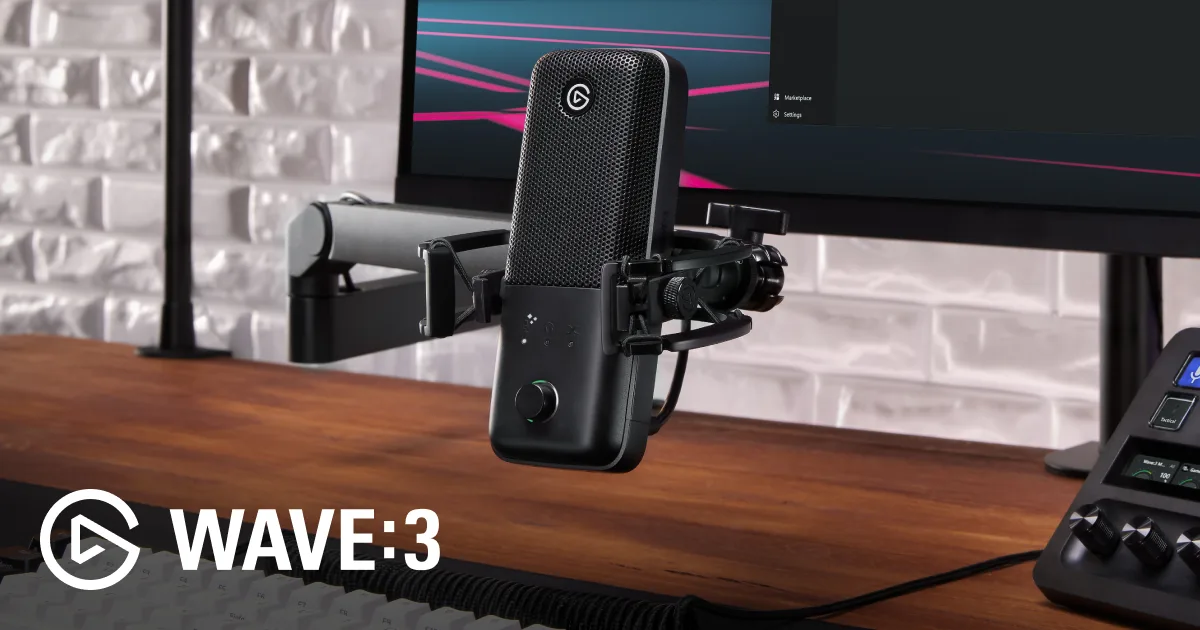
Every other microphone in this category comes with an application. Shure has MOTIV Mix, Elgato has Wave Link, Røde has Røde Central. They are all reasonable and they are all another thing running on your machine.
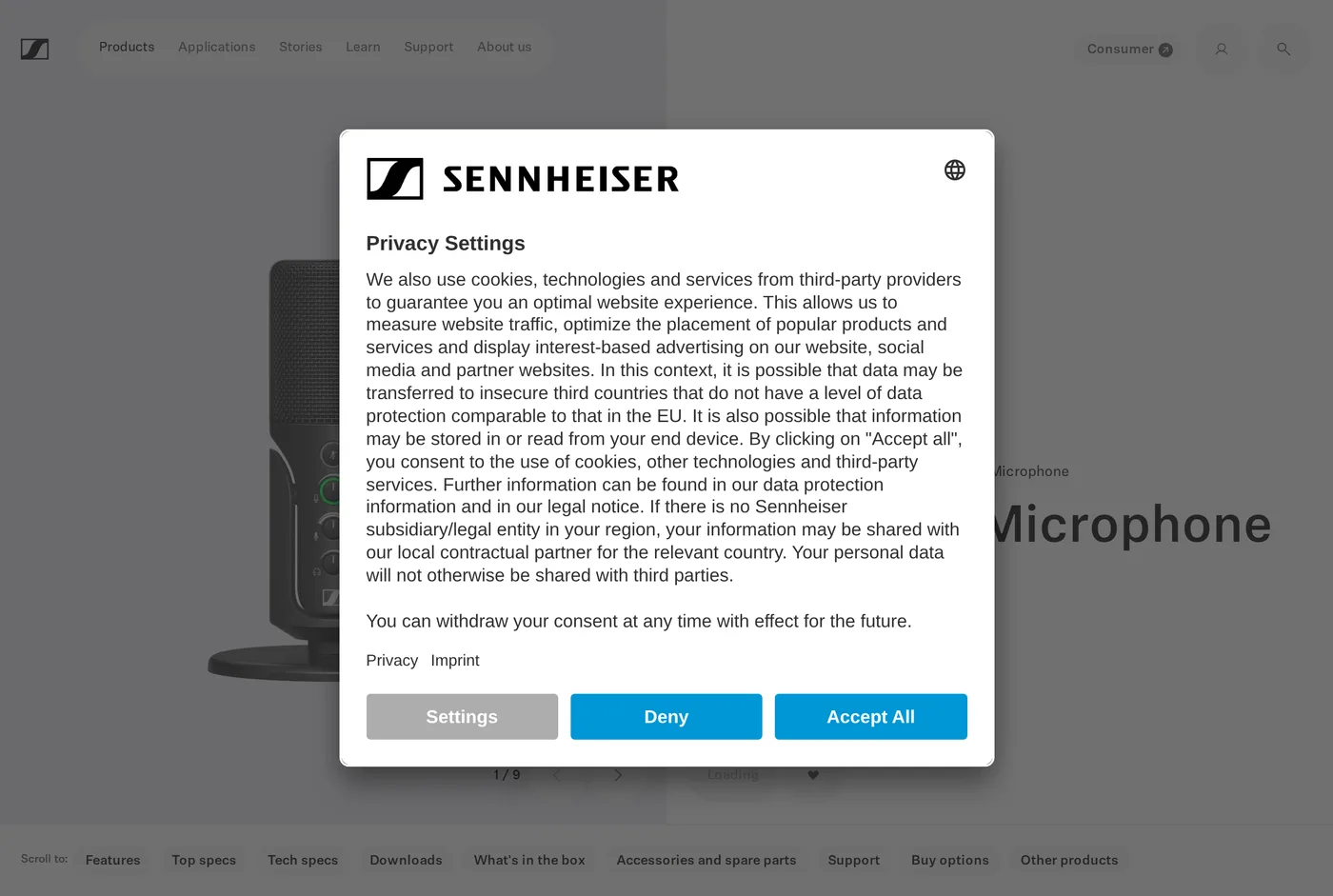
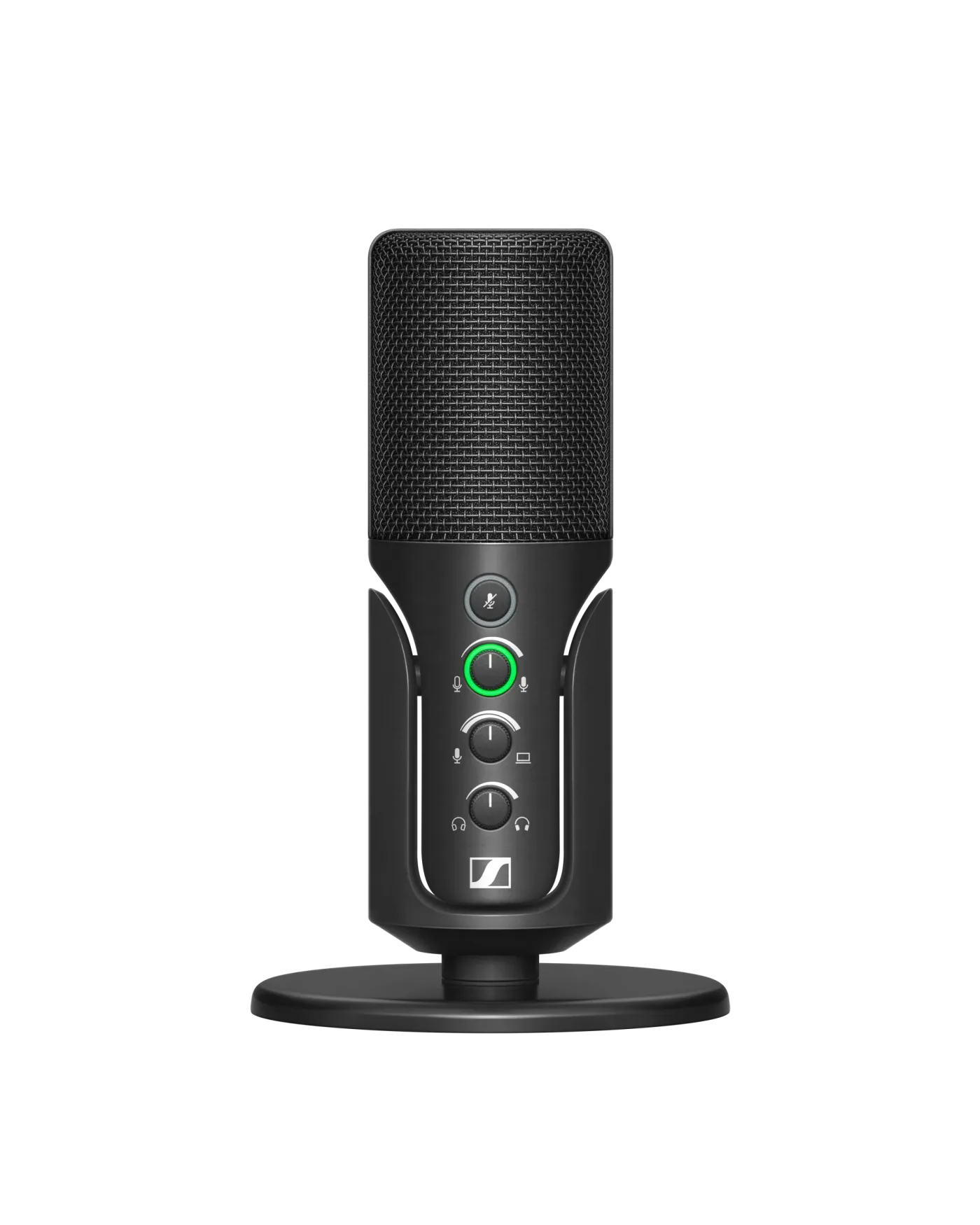
The Sennheiser Profile has three knobs on the front — gain, a mix control that blends your own voice against the computer's audio in your headphones, and headphone volume — and nothing else. Plug it into USB-C, it appears as an audio device, and you adjust it by turning a knob.
For a lot of people this is the correct design. It works on a corporate laptop where you cannot install anything. It works identically on a Mac, a Windows machine and a Linux box. It will still work in ten years when the companion app has been discontinued.
The sound
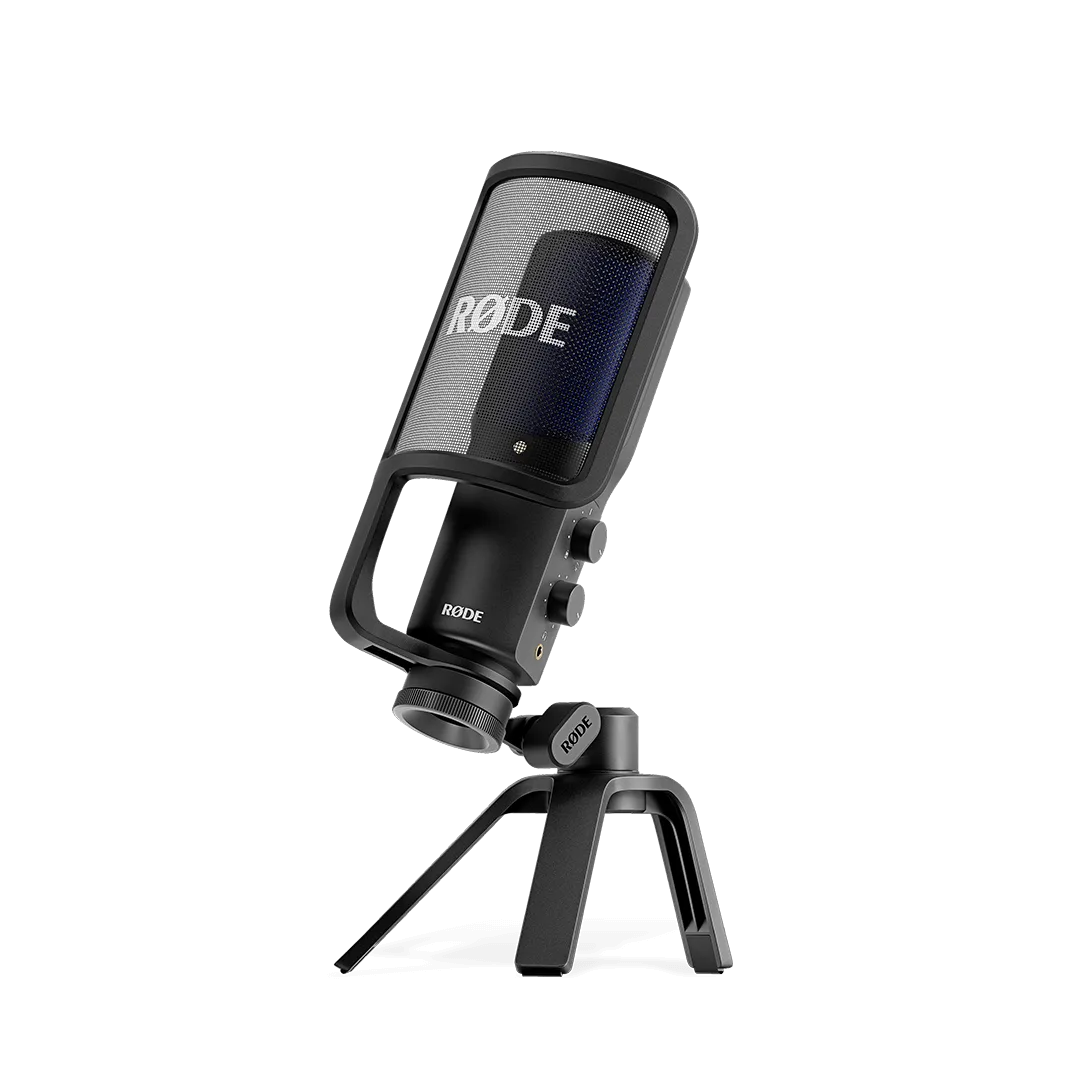
A cardioid condenser with Sennheiser's house tuning, which is a gentle presence lift and a controlled low end. It is flattering on a wide range of voices — noticeably more forgiving than the Elgato on a bright voice, and warmer than the Røde on a thin one.
Being a condenser, it hears the room. Everything in the Røde review about soft furnishings applies here without modification: good room, excellent results; hard room, you will hear the hard room.
At $139 it is the cheapest microphone in this group and it does not sound like it.
What it does not have
No processing. No compressor, no limiter, no noise reduction, no anti-clipping. If you get suddenly loud, you clip, and there is no Clipguard to save you. The mitigation is to set gain conservatively and leave headroom, which is what you should be doing anyway, but it does mean this microphone is less forgiving of a careless setup than the Shure.
No mute. This is the real omission. A microphone sold in 2026 that will spend most of its life on video calls should have a physical mute, and turning the gain knob to zero is not the same thing — it is slow, and you have to remember where it was.
You can mute in your calling application, which is what everybody does anyway. It still feels like a missing part.
Setting the gain without software
With no meter in an application, gain is set by ear and it is easy to get wrong in both directions.
Put on headphones and turn the mix control fully towards the microphone so you hear only yourself. Speak at the volume you would use on a call. Turn the gain up until your voice sounds present and full in the headphones, then back it off slightly.
Then do the thing people skip: laugh, or say something loudly. If it distorts, you are too high. Because there is no limiter here, that headroom is your only protection.
Finally set the mix back to the middle so you can hear the other person as well as yourself. Once set, none of this needs revisiting.
Build and stand
Metal body, weighty, properly finished. The included table stand is better than most bundled stands — a folding tripod with enough mass to stay put — but it is short, so the microphone ends up below your mouth and pointing up at your chin unless you raise it.
Sennheiser sell a Streaming Set bundle with a boom arm and integrated cable management, which is the version to buy if you know you want an arm. Otherwise budget for one separately.
The Streaming Set, and whether to take it
Sennheiser sell the same microphone in a bundle with a boom arm, and the arm has cable management routed inside it.
If you already own an arm, buy the microphone alone. If you do not, the bundle is priced close to what a decent arm costs separately, and an arm designed around the microphone avoids the usual game of finding a thread adapter that fits.
Either way, get it off the desk. Everything good about this microphone is undone by a rigid stand transmitting your keyboard into the recording, and that is true of every condenser ever made.
Who should buy it
Someone who wants to sound good on calls, works in a reasonably soft room, and does not want to think about audio software ever again. That describes a very large number of people and almost no microphone marketing addresses them.
Someone who wants processing, a mute button, or a microphone that tolerates a noisy room: the Shure MV7+, at twice the price.
Verdict
8.2. The most sensible microphone here for ordinary working life, and the one we would recommend to a colleague who asked without wanting a lecture.
What holds up
- Three physical controls — gain, mix, headphone volume — with no software anywhere
- Sennheiser's capsule tuning is flattering on a wide range of voices
- Works identically on any machine, including locked-down work laptops
- Solid metal build with a stand that does not feel like an afterthought
What wears thin
- No onboard processing at all — no compressor, no noise reduction
- Condenser, so the room matters as much as it does on any condenser
- No mute button, which is a genuine omission on a call microphone
- The table stand is short; most people will want a boom arm