Not a microphone review
This is the only product in this category that is not a microphone for one person sitting at a desk, and it is here because the situation it solves is extremely common and badly served: two or three people in a room, joining one call.
The improvised solutions are all bad. One person's laptop microphone picks up whoever is nearest and makes everyone else sound like they are in the corridor. A desk microphone points at one person by design. Passing a phone around is worse.
What it does
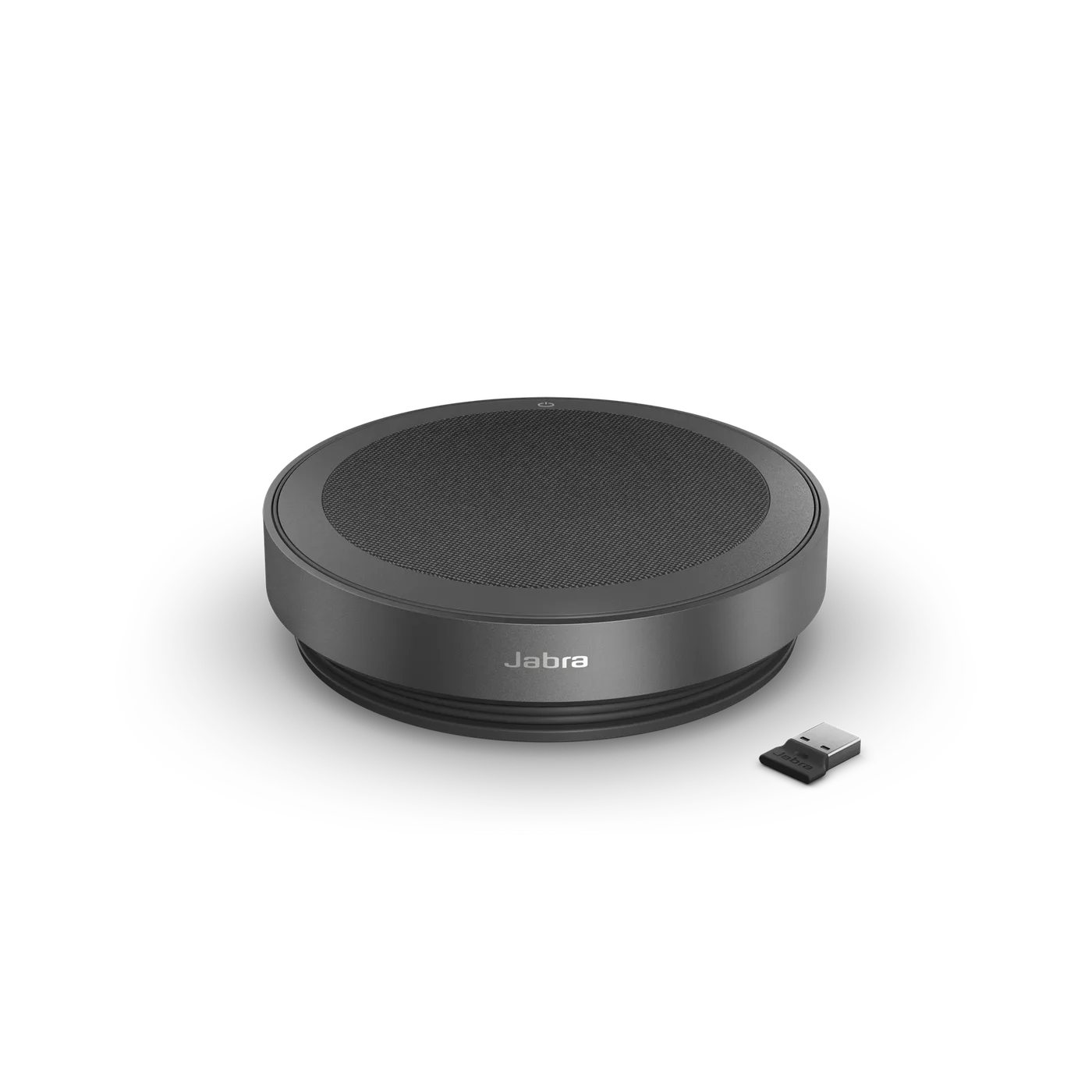
A puck with four microphones arranged around it and a speaker in the middle. The array picks up voices from any direction at conversational distance, so people can sit normally around a table rather than leaning towards a device.
The important feature is full duplex: both ends of the call can talk at the same time without the audio ducking or dropping. Cheap speakerphones are half duplex, which is why they produce that stilted, walkie-talkie conversation where everybody interrupts and then apologises. This does not do that, and in a meeting with three people in the room and four on the call, it is the difference between a conversation and a queue.
Noise handling is good. Paper shuffling, a laptop fan and the air conditioning are all attenuated without chewing up the voices.
The speaker
Clear and intelligible at meeting volume, and thin. It is voiced for speech, which is correct, and it is not something you would want to listen to music on. Nobody should buy it expecting otherwise.
Portability
Battery-powered with a full working day of meetings in it, and small enough to live in a laptop bag. Connects over USB-C or Bluetooth, and pairs quickly enough that it does not become the thing everyone waits for at the start of a meeting.
If you move between a home office and an office, or into different meeting rooms, this is the practical advantage over anything installed.
What it is bad at
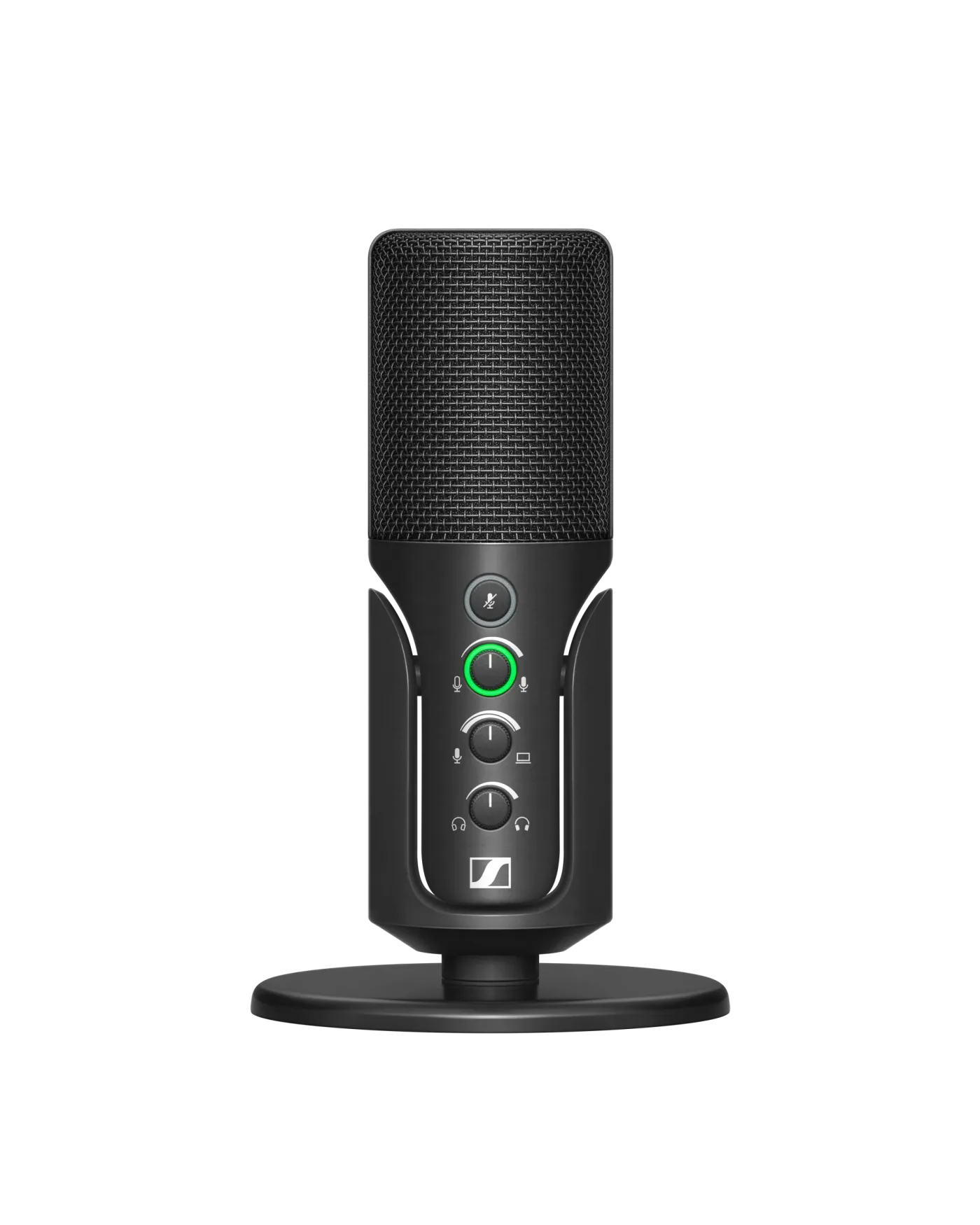
Being a desk microphone. If you are alone at a desk and you use this for your calls, you will sound like someone at a desk with a speakerphone: distant, roomy and processed. A $139 Sennheiser Profile with a pair of headphones sounds dramatically better and costs a third as much.
This matters because the Speak2 75 is often bought as a general audio upgrade for a home office, and for the solo worker it is a downgrade with a price tag.
Where to put it on the table
A speakerphone's performance is mostly geometry.
Put it in the middle of the group, not in front of one person. The array is designed to pick up around itself; placed at one end of a table it will favour whoever sits nearest and make the far end sound distant.
Keep it off a resonant surface. A glass table amplifies every tap and slide; a tablecloth or even a folded sheet of paper underneath helps more than you would expect.
Keep it away from a laptop fan. Thirty centimetres is usually enough to stop a fan being the loudest constant sound in the room.
And mute it when nobody is speaking in the room. Full duplex is good; it is not a substitute for basic meeting manners.
Price
Around $400, which is a lot for a puck. It is priced as business equipment because that is what it is, and it competes with the cost of a proper room system rather than with desk microphones.
For a small studio or a home office that hosts two or three people for calls a few times a week, it is defensible. For an individual, it is not.
Battery and the working day
Jabra quote a full day of meetings, and our experience matched: a working day of intermittent calls with the device left on between them did not exhaust it.
It charges over USB-C, which means it charges from the same brick as everything else and you are not hunting for a proprietary cable in a meeting room.
The practical habit that matters is leaving it plugged in at your desk between meetings rather than treating it as a portable device that lives in a bag. A speakerphone that is flat when the meeting starts is worse than no speakerphone, because everyone waits while you find a cable.
A note on the website
Jabra's product pages sit behind a consent wall that makes reading the specifications more tedious than it should be. If you are comparing models, the specification sheet PDF is easier to work with than the page.
Verdict
7.6. It does its job better than anything else here does that job. The score reflects how few readers of a home-office site actually have that job.
What holds up
- Four-microphone array picks up a table of people without anyone leaning in
- Full duplex — both sides can talk at once without the audio dropping out
- Runs on battery for a full day of meetings and packs into a bag
- One USB or Bluetooth connection replaces a microphone, a speaker and a hub
What wears thin
- For a single speaker at a desk, a $139 microphone sounds better
- Expensive for a device most desks do not need
- Speaker output is clear but thin — fine for voices, poor for anything else
- Jabra's site puts it behind a consent wall that makes specifications tedious to read