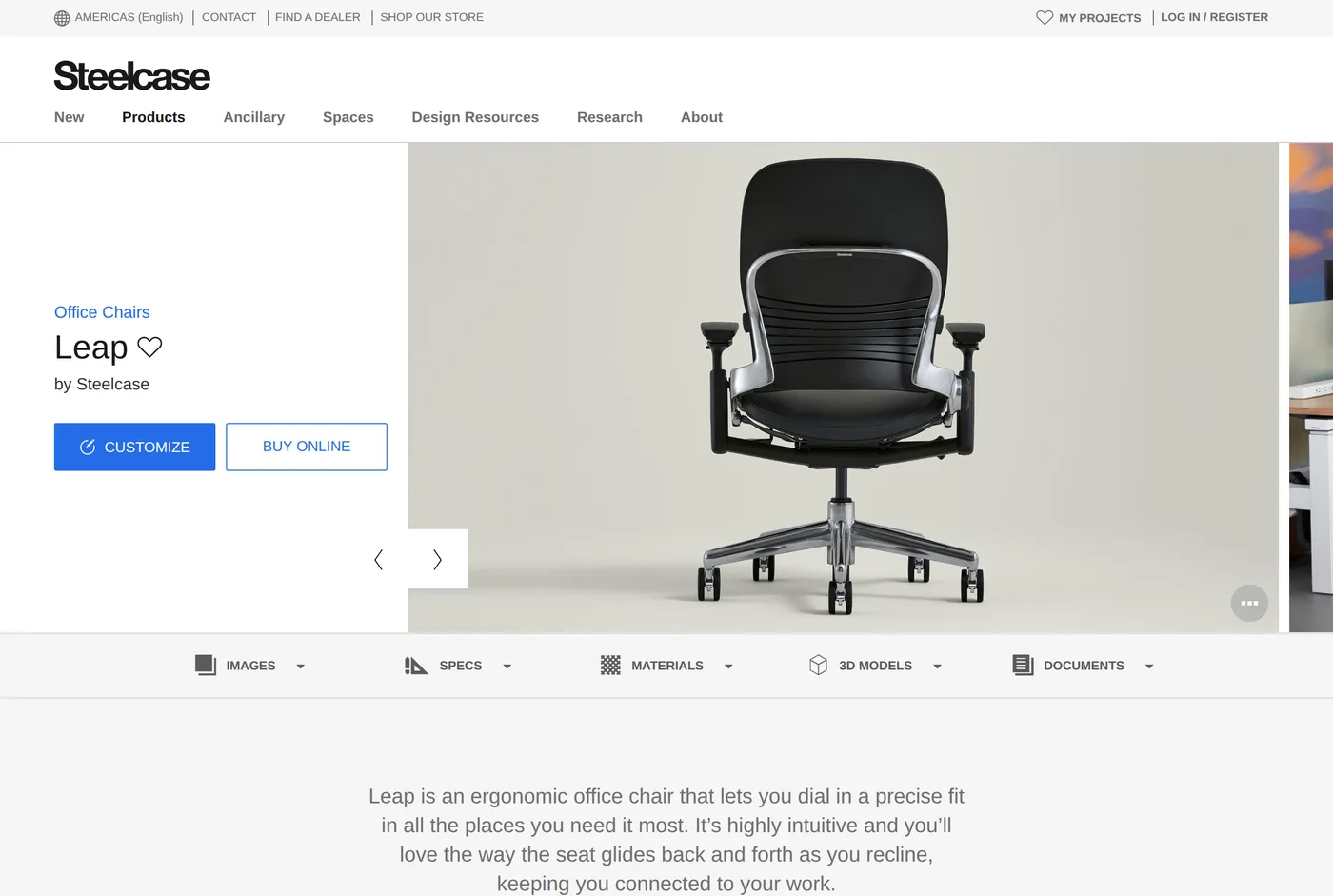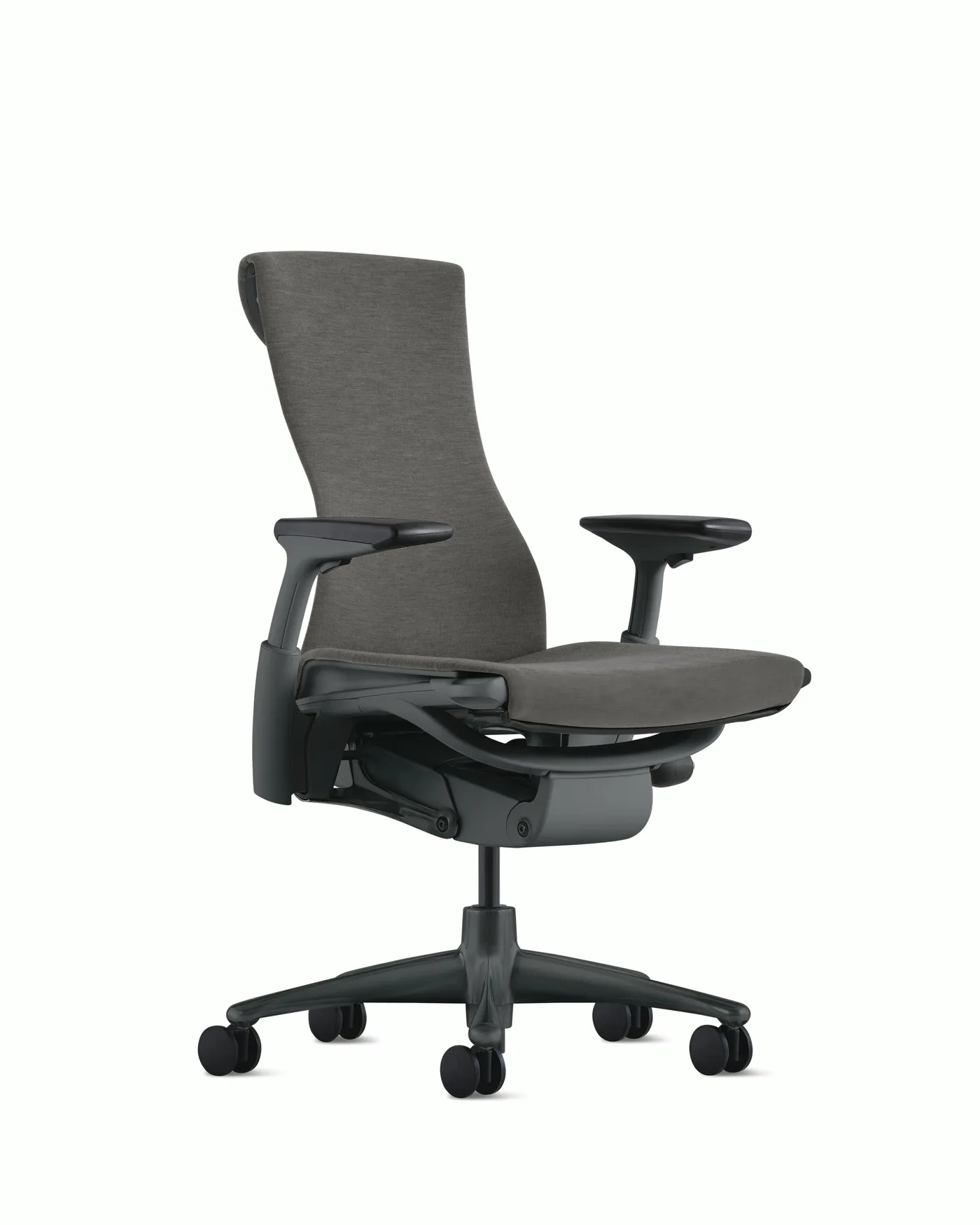
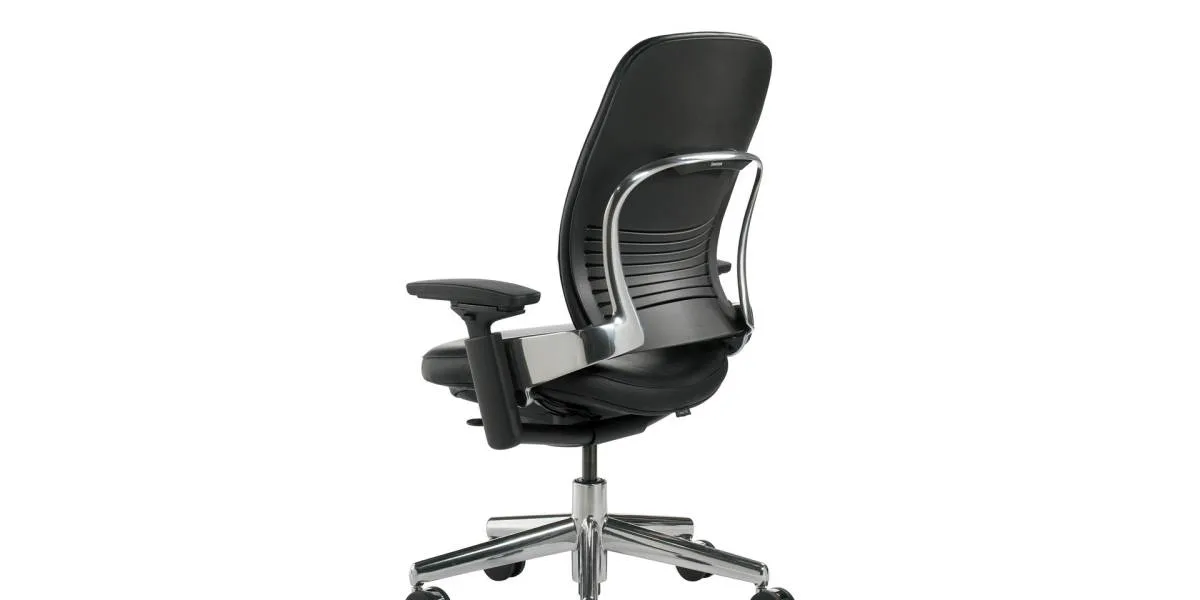
Most chair reviews end up being about a single body — the reviewer's. The Leap is the one chair where that matters least, because it adjusts far enough in enough directions that it fits almost anyone who is willing to spend twenty minutes setting it up. That is why it is our default recommendation when someone is buying for a partner, an employee or a teenager who is still growing.
What adjusts
Nearly everything, and that is not a figure of speech.
Seat depth slides roughly 100 mm, independently of the back.
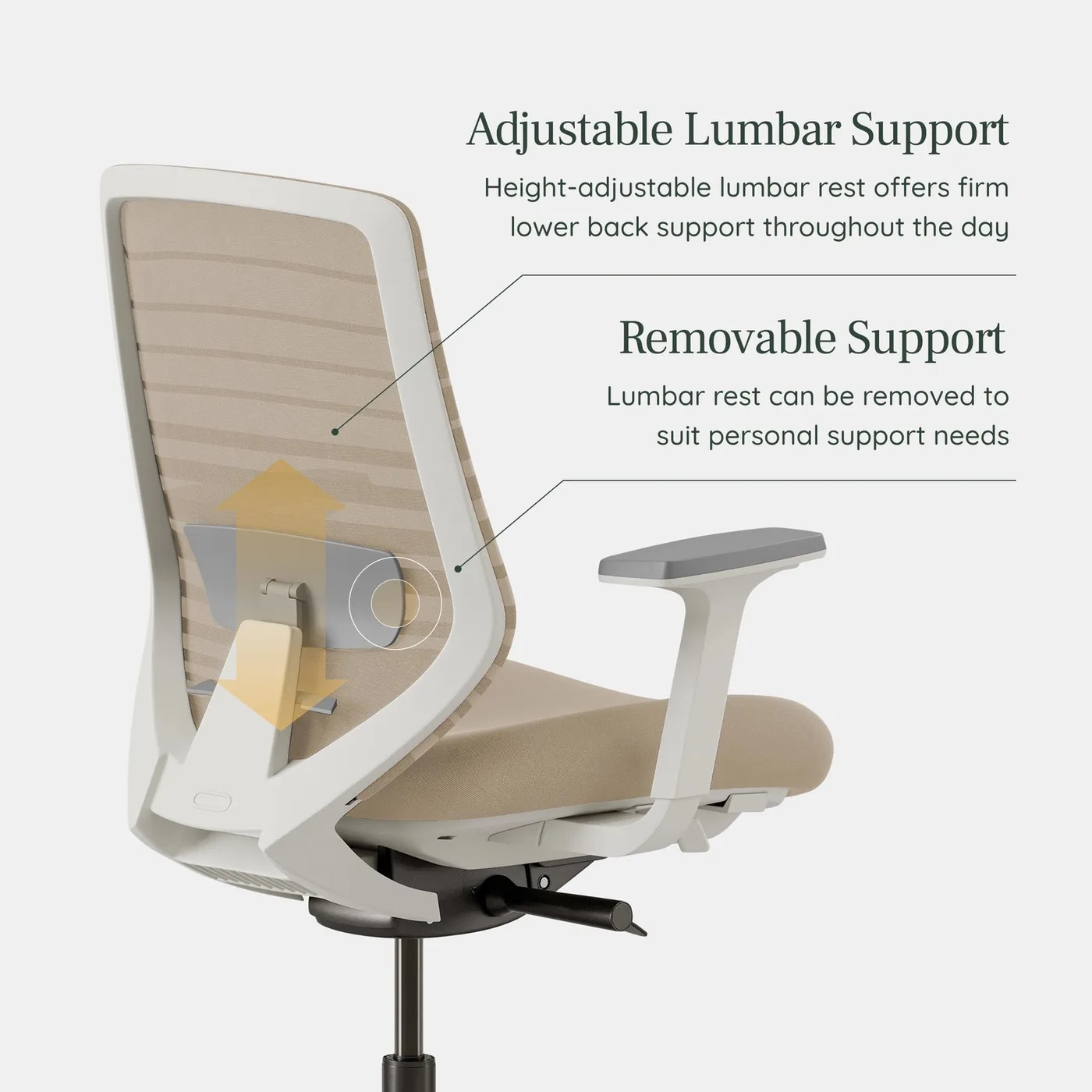
Lower-back firmness is a separate control from back tension — you can have a soft recline with an aggressive lumbar push, which very few chairs allow.
The upper back tilts relative to the lower back, so the top of the backrest does not dig in when you lean.
Arms adjust for height, width, depth and pivot.
The consequence is that the Leap does not need you to know your measurements before you buy. Where the Aeron asks you to pick a size correctly and lives with that decision for twelve years, the Leap asks you to fiddle with levers and rewards you for it.
LiveBack, and whether it does anything
Steelcase calls the flexing backrest LiveBack. The claim is that the back changes shape as your spine changes shape rather than presenting a fixed curve.
In use, what you notice is what does not happen. When you twist to reach something on a side table, the back does not fight you and then shove you back square. It is a small thing that you feel as the absence of an annoyance, which is a hard thing to sell in a photograph and an easy thing to appreciate on day four.
The setup problem
The Leap's weakness is its first hour. There are levers on both sides, a slider under the seat, a dial at the back and a four-way arm control, and the chair does not ship set up for you. People who buy one and never touch the controls get a mediocre chair, which is where a good part of the "I didn't see what the fuss was about" reaction comes from.
Our suggested order: seat height so your feet are flat, then seat depth, then lumbar firmness, then back tension, then arms last. Arms last matters — set them before the seat and you will set them wrong.
Heat, and the fabric question
It is a foam-and-fabric chair. In a room that gets warm it will be warmer than an Aeron, full stop. Steelcase offers a range of fabrics and the more open weaves help a little, but physics wins. If your office is hot, buy mesh.
In a cold room, the opposite applies, and the Leap is far more pleasant in January than any mesh chair we have used.
Value, new and used
At list, the Leap undercuts both the Aeron and the Embody while adjusting further than either. That alone makes it the best-value chair among the big three at full price.
Used, it is extraordinary. Corporate refits dump Leaps onto the second-hand market in volume, and because it is a single size, the supply is not fragmented the way the Aeron's is. A well-kept Leap at a third of list is, in our view, the single best money you can spend on a home office. The parts — gas lifts, arm pads, casters — are commodity items.
Buying used, which is what most people should do
Leaps come out of offices in batches and the market is deep. Things to check:
Which generation. The Leap V2 is the one to want and has been in production for years. The original V1 is older, less adjustable and should be priced much lower.
The seat foam. Press it hard in the middle. A permanent dish is the one failure that is expensive to fix, because a replacement seat pan costs real money.
The arm pads. They wear through, they look awful, and they cost very little to replace. Use them as a negotiating point, not a reason to walk.
The mechanism. Sit down and lean back through the full range. Any clunk or catch is worth investigating; smooth is normal even on a ten-year-old chair.
Casters. Almost every used chair arrives with hard casters for carpet. On a wooden floor, budget for soft ones.
A Leap V2 with tired arm pads and the wrong casters is roughly forty pounds away from being as good as a new one.
Against the Gesture
Steelcase sells both. The Gesture's arms are dramatically better, the seat is slightly wider, and it costs a few hundred more. If you switch constantly between a laptop on your knees, a phone held up, and a keyboard, pay for the Gesture. If you sit at a keyboard, the Leap is all the chair you need and the arm advantage is not worth the difference.
The Leap is not exciting. It is grey, it is corporate, and it looks like what it is. It is also the chair we would put in a room if we had to guess who was going to sit in it.
What holds up
- Seat depth, lumbar firmness, back tension, arm height, width, depth and pivot all adjust independently
- LiveBack flexes with a twisting spine instead of forcing it square
- One size fits a wider range of bodies than the Aeron's three
- Enormous second-hand supply from office refits, with parts that are easy to find
What wears thin
- Foam and fabric — warmer than mesh in a hot room
- The number of levers is genuinely confusing on day one
- Standard model's arms rotate less than a Gesture's
- Looks like office furniture, because it is