The problem, which you have stopped noticing
Headphones take up a startling amount of desk. A pair of over-ears occupies roughly the footprint of a dinner plate, and they live in the middle of your working area because that is where you took them off. Every desk photo you have ever admired has the headphones somewhere else.
The usual answers are a headphone stand, which occupies desk space to solve a desk space problem, or a hook screwed into the desk, which requires drilling something you may not own.
The design
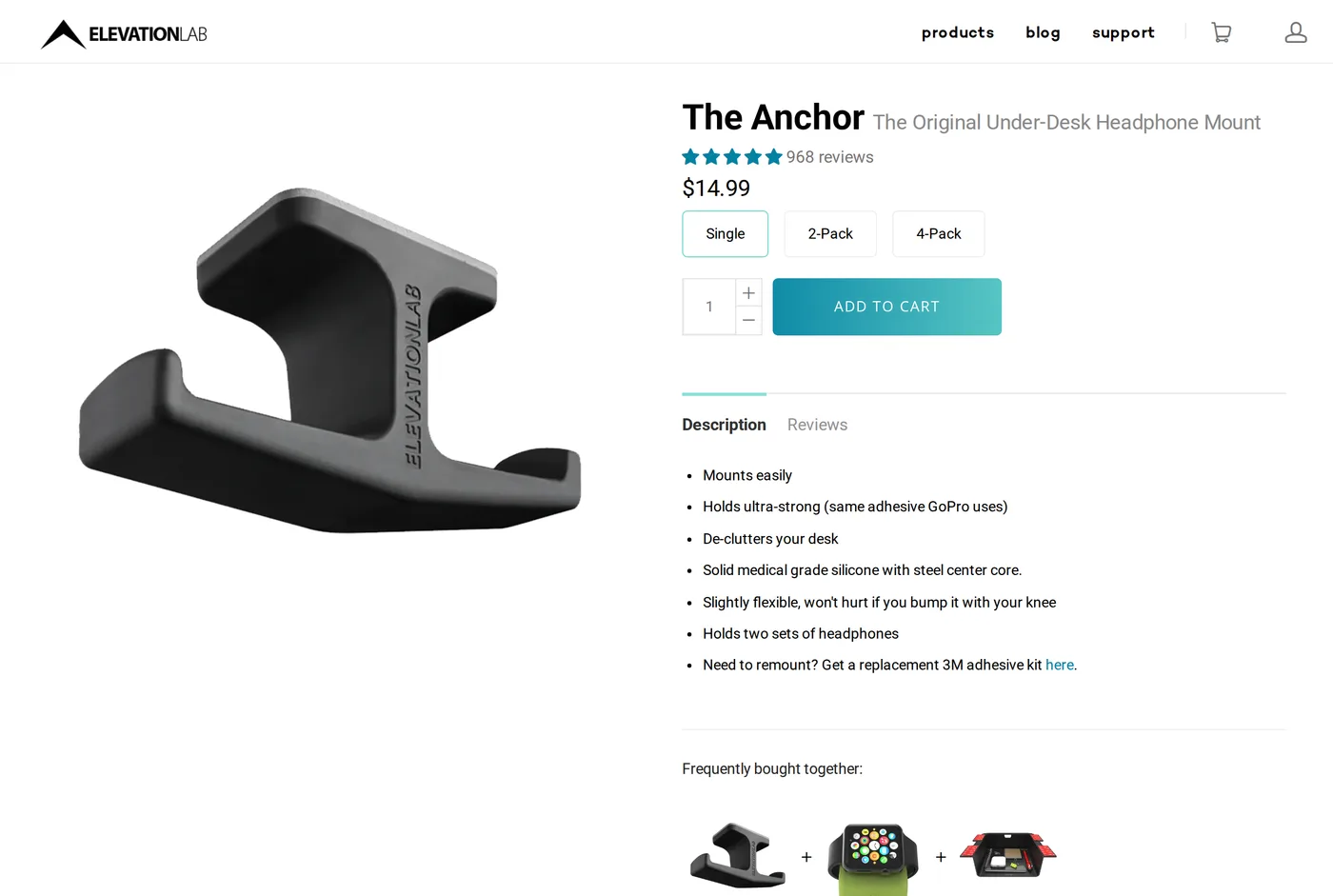
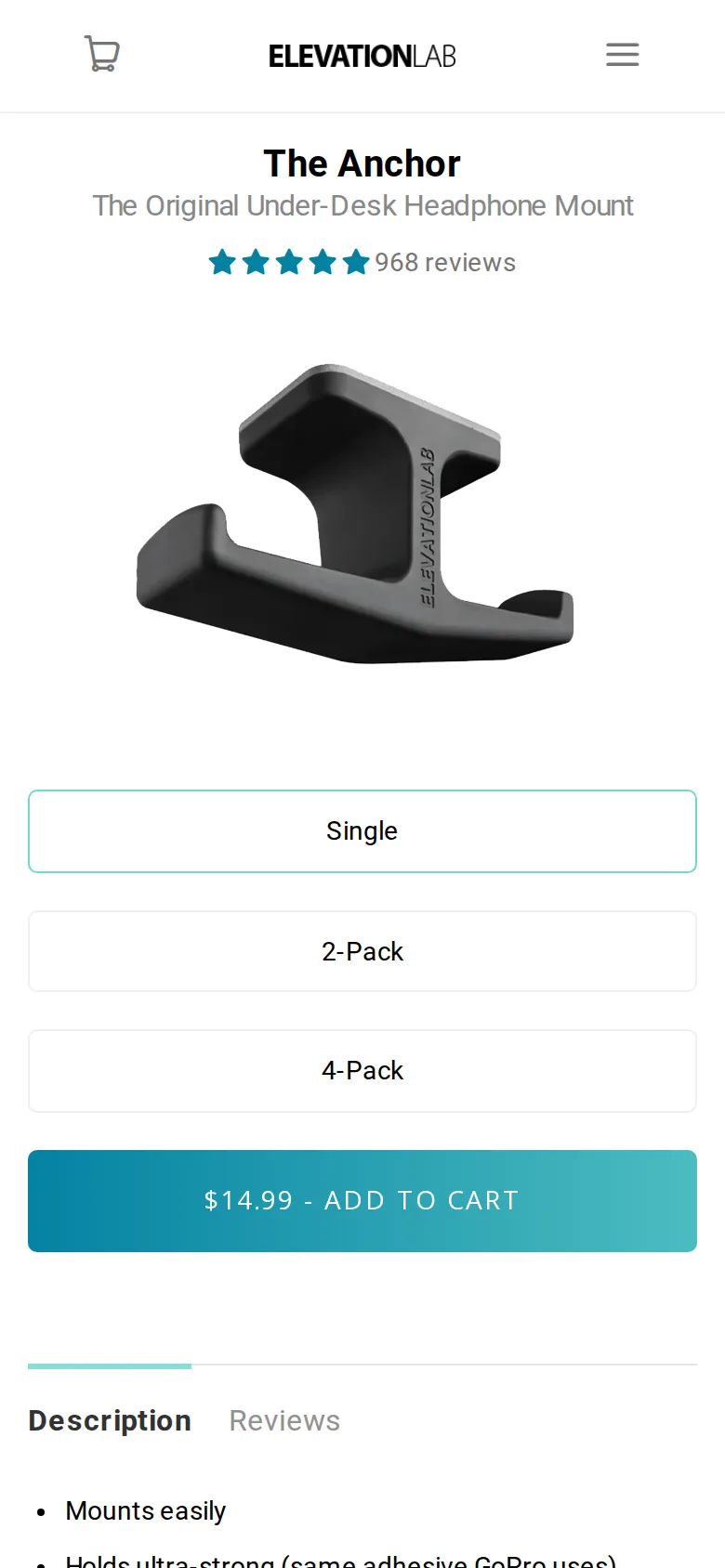
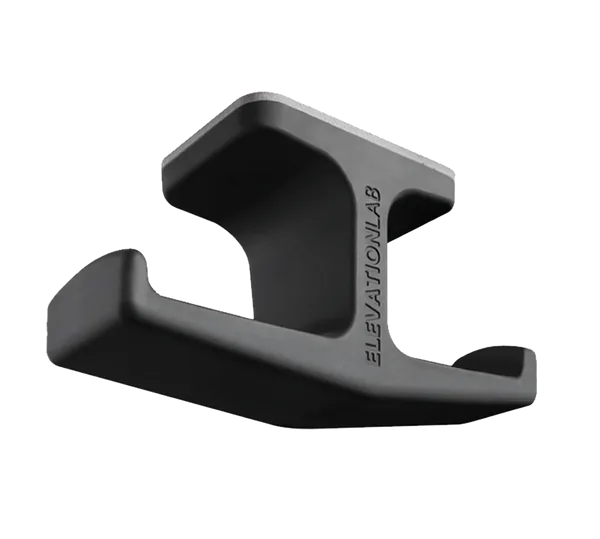
A moulded silicone hook with a steel core, backed with 3M VHB adhesive tape, stuck to the underside of the desk near the front edge. Headphones hang from it, out of sight, reachable without looking.
Two design decisions make it better than the coat hook people improvise with.
It flexes. A rigid metal hook under a desk is a thing you bark your knee on, and the impact transmits straight into the adhesive as a lever force, which is how improvised mounts end up on the floor. The Anchor bends, which hurts less and puts almost no load on the bond.
It has a steel core. Pure silicone would sag under a heavy pair of planar headphones. The core keeps the shape.
Fitting it
Clean the surface properly — an alcohol wipe, not a damp cloth — press it on firmly, and leave it a few hours before hanging anything. VHB tape reaches most of its strength quickly and full strength after about a day.
Done right, it will not come off. Ours has held a heavy pair through several house moves' worth of knocks.
Done wrong — on a dusty, oiled or textured surface — it will fall off in a week, and the failure is always the surface prep rather than the tape.
Where it does not work
Textured or oiled wood. A solid timber desk finished in oil, or one with a rough sawn underside, does not give VHB a surface to key into. A butcher-block top is usually fine on the smooth machined underside; a live-edge slab may not be.
No clearance. Some desks have a crossbar, an apron or a cable tray running along the front underside. You need somewhere with a hand's clearance below.
Removal. It is adhesive, and VHB is the good stuff. Getting it off involves fishing line, patience and probably a solvent, and it may take some finish with it. Decide where it goes before you stick it.
Where exactly to put it
Two centimetres of position changes how well this works.
Mount it near the front edge of the desk, on the side away from your mouse hand, far enough back that your knee clears it when you cross your legs. Too close to the front and you will catch it; too far back and you are reaching under the desk blindly.
Hang the headphones before you commit, to check they clear your leg and the drawer. Over-ear headphones hang lower than you picture them.
If your desk is a sit-stand desk, do this check at sitting height, which is when clearance is tightest.
Thirty seconds of thinking here saves an adhesive removal job later.
What else it holds
Anything that hangs. We have used one for a camera strap, one for a bag, and one for a cable bundle. Elevation Lab sell multi-packs for exactly this reason and at this price it is worth buying more than one.
Getting it off again, if you must
Since the adhesive is the one irreversible thing here, the removal procedure is worth knowing before you commit.
Work a length of fishing line or dental floss behind the base and saw it through the tape with a slow side-to-side motion. Do not pull the hook — VHB is stronger in tension than most desk finishes are.
Whatever tape residue remains comes off with an adhesive remover and patience, though on an oiled timber underside it may take some finish with it. On laminate or painted MDF it cleans up fully.
Elevation Lab sell replacement adhesive pads, so a hook removed carefully can be remounted elsewhere.
The score
Nine out of ten, on a site where a Herman Miller Aeron gets 9.1, and we mean it.
Scores here are relative to the category and to the price. Judged that way, a $15 object that permanently removes a dinner-plate-sized obstruction from your working surface, that installs in thirty seconds, that has no failure modes in ordinary use and that will outlive the desk, is close to a perfect purchase.
If you own headphones and a desk, this is the best fifteen dollars on the site.
What holds up
- Flexible silicone, so knocking it with a knee does not hurt and does not shear the mount off
- Steel core keeps the shape under heavy audiophile headphones
- 3M VHB adhesive is the real thing and it does not let go
- Frees a surprising amount of desk surface for fifteen dollars
What wears thin
- Adhesive mounting is effectively permanent — removing it is a job
- Needs a clean, smooth, flat underside; textured or oiled wood is marginal
- The desk edge has to have clearance for your hand underneath
- One hook, one set of headphones